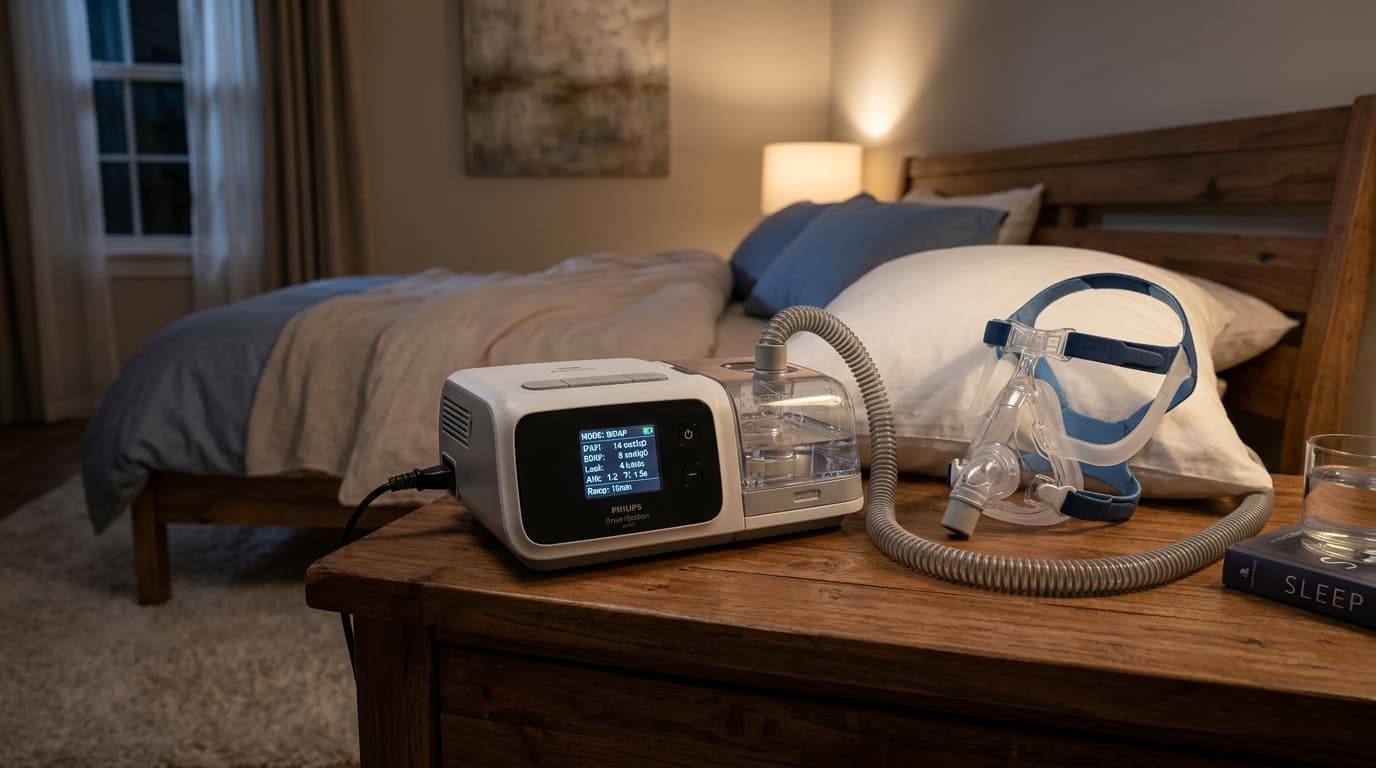
Positive airway pressure (PAP) machines are life-saving non-invasive ventilation devices used to treat sleep apnea, chronic obstructive pulmonary disease (COPD), and congestive heart failure. Patients often ask whether they need a CPAP or BiPAP machine.
Key Clinical Takeaways
- CPAP maintains one continuous pressure, ideal for standard Obstructive Sleep Apnea.
- BiPAP provides two pressure levels (IPAP and EPAP), essential for COPD and shallow breathing.
- Heated humidification is vital in both devices to prevent nasal congestion and dry throat.
- Always consult your pulmonologist’s prescription before choosing between CPAP and BiPAP.
1. What is CPAP (Continuous Positive Airway Pressure)?
CPAP delivers a constant, single level of pressurized air throughout both inhalation and exhalation. It acts as a pneumatic splint to prevent the soft tissues of the throat from collapsing during sleep.
Best Suited For: Mild to moderate Obstructive Sleep Apnea (OSA) patients with healthy lung mechanics.
2. What is BiPAP (Bilevel Positive Airway Pressure)?
BiPAP delivers two distinct pressure settings: a higher Inspiratory Positive Airway Pressure (IPAP) when inhaling, and a significantly lower Expiratory Positive Airway Pressure (EPAP) when exhaling.
This pressure difference significantly reduces the patient’s work of breathing, making it effortless to exhale carbon dioxide (CO2).
Best Suited For: COPD, hypercapnia (high CO2 retention), neuromuscular disorders (ALS, Myasthenia Gravis), and patients unable to tolerate high continuous CPAP pressures.
3. Rental Considerations for Delhi NCR Patients
PAP machines require proper mask fitting (nasal vs full-face) and clinician pressure calibration according to sleep study titration reports. CareOn24 provides biomedical calibration and clinical home demo on all rentals.
Written & Reviewed by Maithun Kumar
Respiratory Equipment Lead • CareOn24 Clinical Team
Our clinical leadership guarantees evidence-based medical practices, verified nursing protocols, and biomedical safety standards across Delhi NCR.
Need Professional Home Nursing or Medical Equipment?
Get certified GNM/B.Sc nurses, compassionate patient attendants, and hospital beds or oxygen concentrators delivered within 2 hours in Delhi, Noida, and Gurugram.
2-Hour Doorstep Service Available in Your Locality:
CareOn24 deploys verified ICU nurses, patient attendants, and biomedical equipment on rent across all key North and West Delhi neighborhoods: